Commercial HVAC maintenance plans, Dallas-Fort Worth

Fewer surprises. More uptime. A maintenance plan built for your rooftop units.

Most Dallas HVAC companies wait for your unit to fail, then bill you for the emergency. We do the opposite: scheduled, documented maintenance that catches the small problems before they become the 7am call.

Fully insured contractors Every visit documented 4-hour emergency standard
Commercial rooftop HVAC package units on a Dallas-Fort Worth building
Maintenance-firstCommercial-only specialists
We place you with vetted commercial contractors: Licensed + insured (COI on request)EPA 608 certifiedNATE-certified techniciansCommercial-only specialistsWorks with ServiceChannel + Corrigo
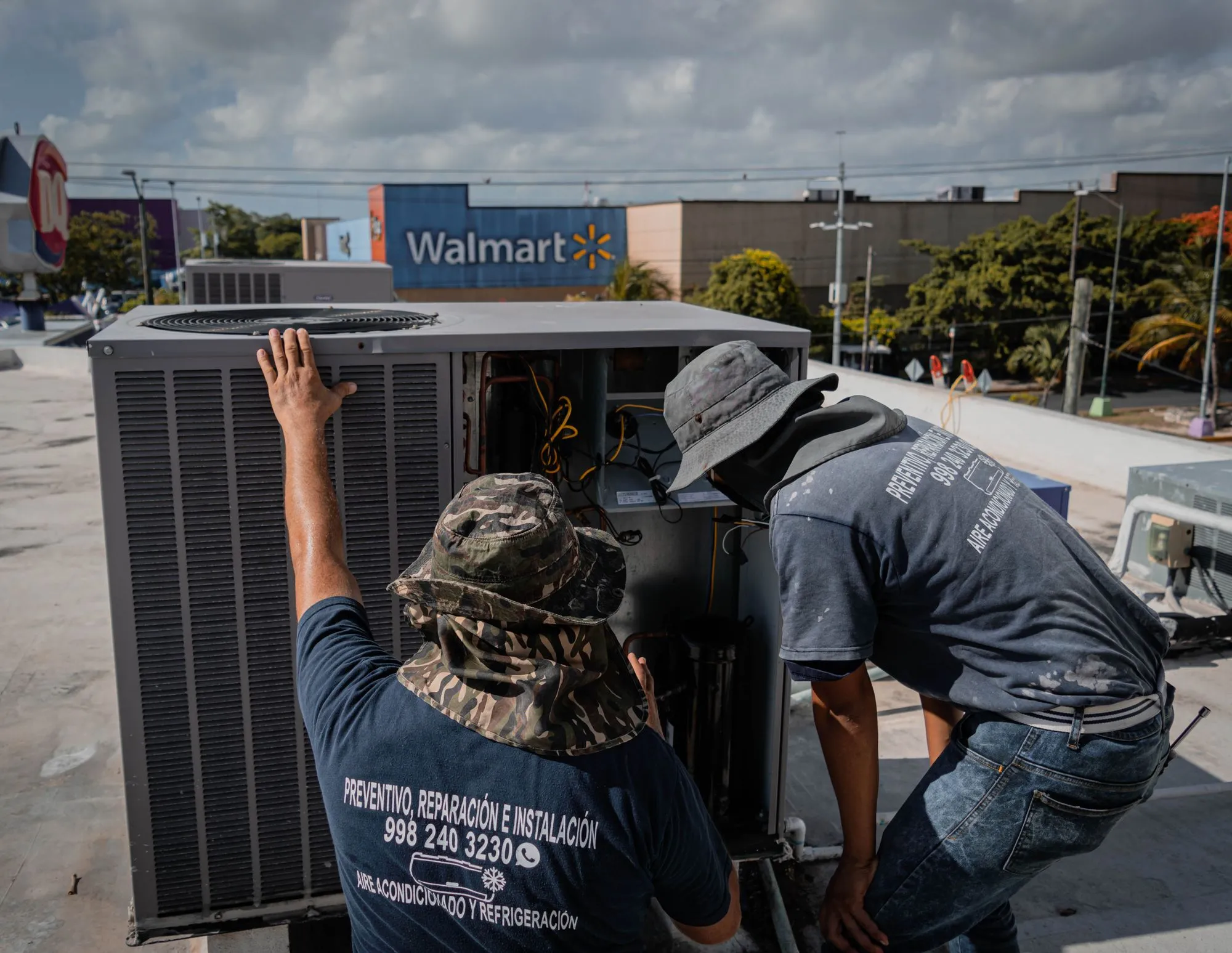
Commercial HVAC technicians servicing a rooftop package unit on a Dallas building

The quick-fix loop costs more than you think

When a rooftop unit only gets attention after it breaks, you pay for it three times: the after-hours emergency rate, the collateral damage (a flooded ceiling, spoiled inventory, an angry tenant), and the equipment that gets replaced years early because nobody caught the failing part. A preventive maintenance agreement breaks that loop.

Planned maintenance runs roughly three to five times cheaper than emergency repair.

What your plan covers on every visit

Every visit, a commercial technician inspects, cleans, and tunes the parts that actually fail. Here is what gets checked on your rooftop units.

What a Dallas Air Co maintenance plan covers on your rooftop unit A rooftop HVAC unit on a commercial building with eight numbered service points covered on every visit. 1 2 3 4 5 6 7 8
  1. 1 Air filters. Replaced and correctly sized to protect airflow and the coils behind them.
  2. 2 Evaporator and condenser coils. Inspected and cleared so the unit actually cools in Texas heat.
  3. 3 Belts and motors. Tension, wear, and bearings checked before they fail on a 100-degree day.
  4. 4 Refrigerant charge. Measured against spec; low charge and phased-out R-22 units flagged early.
  5. 5 Electrical and contactors. Connections, capacitors, and contactors tested for the faults that cause no-cools.
  6. 6 Condensate drain. Cleared and treated to prevent overflow, leaks, and tenant ceiling damage.
  7. 7 Economizer and dampers. Checked so free cooling works and you are not running compressors for no reason.
  8. 8 Thermostat and controls. Calibrated so the building holds setpoint without short-cycling.

Maintenance plans that scale with your buildings

Essential

Stay ahead of the big failures.

2 visits per year

  • Seasonal inspection (cooling and heating)
  • Filter changes
  • Coil inspection and clearing
  • Belt and motor check
  • Refrigerant and electrical check
  • A written report after every visit

Best for: Single-site buildings with a handful of rooftop units.

Get my Rooftop Risk Report

Portfolio

One plan across every building.

Custom schedule

  • Everything in Priority
  • Portfolio-wide reporting
  • Per-building budgets and CapEx planning
  • A single point of contact
  • Work-order integration (ServiceChannel, Corrigo)

Best for: Property managers and owners with multiple sites.

Get my Rooftop Risk Report

Plan names are examples. We tailor the scope and cadence to your buildings, and set pricing after a quick walkthrough.

The standard we hold every contractor to

We are selective about who we place you with. Before a contractor earns your building, they commit to our standard:

  • A 4-hour emergency response when a unit goes down.
  • No surprise upsells on repairs found during a maintenance visit. You approve the work first.
  • Zero tenant disruption, scheduled around your building.
  • Every visit documented with photos and a written report.

Built for the people who get blamed when the AC goes down

Facility managers, property managers, and owners across offices, retail centers, restaurants, medical buildings, hotels, and warehouses. If you are responsible for keeping a building comfortable and a tenant happy, the Rooftop Risk Report shows you where your risk is before the season does.

Commercial HVAC maintenance: common questions

What is a commercial HVAC preventive maintenance agreement?

A preventive maintenance agreement (PMA) is a scheduled service plan for your commercial HVAC equipment. A contractor inspects, cleans, and tunes your rooftop units on a set cadence, usually two to four visits a year, documents the condition of each unit, and flags small problems before they become emergency failures. The goal is fewer breakdowns, lower energy use, and a budget you can predict.

What is the $5,000 rule for HVAC?

The $5,000 rule is a rule of thumb for repair-versus-replace decisions. Multiply the equipment's age in years by the estimated repair cost. If the result is more than $5,000, replacement is usually the better value; under $5,000, a repair often makes sense. It is a guideline, not a substitute for a professional assessment.

How much does commercial HVAC maintenance cost?

Cost depends on how many rooftop units you have, their size in tons, the visit cadence, and your building type, so a real figure needs a short walkthrough. The value case is consistent: planned preventive maintenance runs roughly three to five times cheaper than emergency repair, because you avoid after-hours rates, collateral damage, and equipment that gets replaced years early.

What is the difference between commercial and residential HVAC?

Commercial HVAC is larger, usually roof-mounted (rooftop units, or RTUs), and built for bigger loads, multiple zones, and code requirements that homes do not have. It needs technicians trained on commercial equipment and controls. That is why we place you only with commercial-only specialists, not a residential company working above its depth.

See your rooftop risk first, and claim your early-access spot.

We are onboarding our first Dallas-Fort Worth commercial buildings now. Tell us about yours and a commercial specialist sends back a free Rooftop Risk Report, the units most likely to fail this season, plus your spot on the early-access list. No sales call required.

Free Rooftop Risk ReportSee your risk ›