Commercial vs Residential HVAC: What Is the Difference?
The difference between commercial and residential HVAC comes down to scale, rooftop packaged units, three-phase power, and code requirements homes never face.
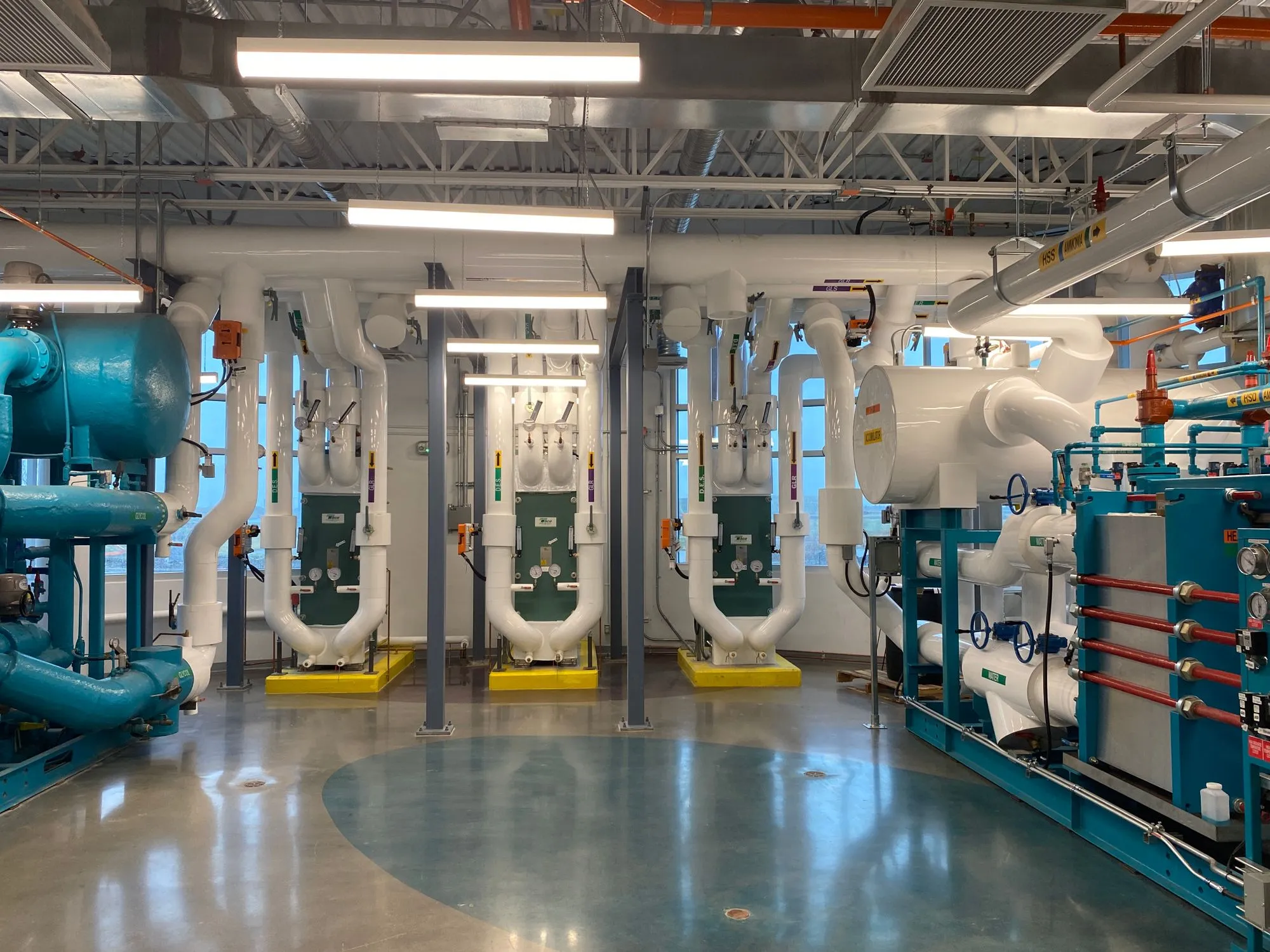
Commercial HVAC systems are fundamentally different from residential ones. They’re larger, usually roof-mounted as packaged rooftop units, run on three-phase power, handle bigger loads across multiple zones, and must meet commercial building codes that homes never face. They require technicians trained specifically on commercial equipment and controls, not residential split systems.
Key Takeaways
- Commercial HVAC uses packaged rooftop units (RTUs); residential uses split systems with an outdoor condenser and indoor air handler.
- Commercial systems run on three-phase power; residential runs on single-phase.
- Commercial buildings require zoning, economizers, and often a building automation system (BAS) that residential properties don’t.
- Preventive maintenance runs roughly three to five times cheaper than emergency repair, which matters more at commercial scale.
- Residential contractors lack the training, equipment, and insurance to service commercial RTUs safely.
How Does Size and Capacity Differ Between Commercial and Residential HVAC?
The most immediate difference is scale. A typical residential system handles 1 to 5 tons of cooling capacity for a single-family home. Commercial systems routinely start at 5 tons and scale to 50 tons or more for a single rooftop unit. Large office buildings or distribution centers may run dozens of RTUs simultaneously.
That size gap isn’t just about bigger boxes. Larger systems operate under higher refrigerant pressures, move more air volume, and generate more heat load at the condenser. The components, service intervals, and repair procedures are different in kind, not just degree.
Commercial tonnage is also calculated differently. Residential contractors size equipment for a single conditioned envelope. Commercial load calculations account for occupancy density, equipment heat loads (servers, industrial machinery, commercial kitchens), and the fact that different zones in a building may need heating and cooling at the same time.
Where Is the Equipment Located? Rooftop Units vs Split Systems
Residential HVAC uses a split system. The outdoor condenser sits on the ground beside the building. The indoor air handler sits in a utility closet, attic, or basement. Refrigerant lines connect the two through the wall.
Commercial buildings almost always use packaged rooftop units. The compressor, condenser coil, evaporator coil, and blower are all housed in one cabinet bolted to the roof. Ductwork drops through the roof deck into the occupied space below. There’s no outdoor unit at ground level.
RTUs dominate commercial construction for practical reasons. Rooftop placement keeps mechanical equipment out of leasable space, simplifies maintenance access, and consolidates penetrations in the building envelope. It also means the entire system is exposed to direct sun, wind, and weather year-round, which accelerates wear on belts, motors, and coil fins.
[IMAGE: Side-by-side diagram of a residential split system versus a commercial rooftop unit - search terms: commercial rooftop unit diagram HVAC cutaway]
For DFW buildings, rooftop exposure adds another variable: heat index above 100 degrees for months at a time. A condenser working against ambient air at 105 degrees loses efficiency fast. That’s why proper RTU sizing and coil maintenance matter more in North Texas than in cooler climates.
Learn more about commercial HVAC services in the Dallas-Fort Worth area.
What Is the Difference Between Three-Phase and Single-Phase Power?
Residential HVAC runs on single-phase 240-volt power. It’s the same supply that powers your dryer or range. Most homes are wired for it, and residential HVAC manufacturers design equipment around it.
Commercial buildings are wired for three-phase power. Three-phase delivers more consistent voltage and handles heavier motor loads more efficiently than single-phase. Commercial compressors, large blowers, and chiller motors all require it.
This distinction matters for service. A technician unfamiliar with three-phase systems can create serious hazards. Phasing errors on a commercial compressor can cause the motor to run backwards, destroying it quickly. Three-phase troubleshooting requires different test equipment and a different diagnostic process than residential work.
It also matters for equipment procurement. Commercial RTU compressors, motors, and contactors are specified for three-phase operation. They’re not interchangeable with residential parts, even when the physical form factor looks similar.
How Do Zoning, Economizers, and Controls Add Complexity?
A residential thermostat controls one zone. Commercial buildings typically divide into multiple zones, each with its own temperature setpoint and airflow schedule. A two-story office might have separate zones for the server room, the open floor plan, the conference rooms, and the lobby, all running off the same RTU or a coordinated group of units.
Economizers add another layer. An economizer is a damper system that pulls outdoor air into the building when outside conditions are cool and dry enough to provide “free cooling” without running the compressor. Commercial HVAC codes in Texas require economizers on many new installations. They reduce energy costs significantly, but they require calibration, regular damper inspection, and sensor maintenance to work correctly.
Commercial controls go further still. Many buildings tie HVAC into a building automation system, or BAS. A BAS integrates HVAC, lighting, access control, and sometimes fire safety into a single management platform. It enables scheduled setbacks, remote monitoring, and fault detection. Servicing a BAS-connected RTU requires a technician who understands both the mechanical system and the controls interface.
[INTERNAL-LINK: commercial HVAC repair → /commercial-hvac-repair-dallas/]
If your DFW facility uses a BAS or has complex zoning, commercial HVAC repair calls for a contractor who works in that environment daily, not one who primarily handles residential calls.
How Do Maintenance and Code Requirements Differ?
Commercial HVAC falls under different inspection and code authority than residential. In Texas, commercial mechanical installations follow the International Mechanical Code as adopted by the state, with local amendments. Residential work follows a separate residential code. The permit process, inspection requirements, and equipment certifications differ.
Commercial maintenance schedules are more intensive, too. Coil cleaning, belt tension checks, economizer calibration, condensate pan treatment, and controls verification all happen on cycles that residential maintenance agreements don’t cover. Filter changes alone may involve dozens of units across a large property.
The financial logic of maintenance is straightforward at commercial scale. Preventive maintenance runs roughly three to five times cheaper than emergency repair. For a facility manager overseeing 10 or 20 RTUs, deferred maintenance compounds fast. One failed compressor on a hot July afternoon in Dallas can cost far more than a full year of scheduled service across the entire roof.
Refrigerant compliance is another code area with real liability. Commercial systems that leak refrigerant above EPA threshold amounts require repair within set timeframes and trigger recordkeeping requirements that residential properties don’t face.
Why Do Commercial HVAC Systems Need Commercial-Only Technicians?
The technical differences above translate directly into why you can’t substitute a residential contractor on a commercial job. It isn’t about preference. It’s about training, certification, and insurance coverage.
Commercial RTU technicians are trained on three-phase electrical systems, commercial controls platforms, and the mechanical components specific to packaged units. They know how to navigate an economizer fault, recalibrate a BAS setpoint, or replace a commercial scroll compressor. That knowledge doesn’t transfer from residential split-system experience.
Insurance is the other side of the equation. A residential HVAC contractor typically carries general liability and workers’ comp calibrated for residential jobsites. Commercial work involves higher equipment values, more complex liability chains, and in many cases, tenant or building code exposure. If a residential contractor performs work on your commercial property and something goes wrong, their policy may not cover the loss, and yours may not either if the work was improperly licensed.
DFW commercial property owners who connect with a vetted, commercial-only contractor through commercial HVAC services avoid that exposure by default.
A Quick Comparison: Commercial vs Residential HVAC
- Equipment format: Commercial uses packaged RTUs on the roof; residential uses split systems at ground level.
- Cooling capacity: Commercial starts at 5 tons and scales to 50+ tons; residential typically ranges from 1.5 to 5 tons.
- Power supply: Commercial runs on three-phase power; residential runs on single-phase.
- Zoning: Commercial requires multi-zone controls; residential typically runs one zone per system.
- Economizers: Required on many commercial installations; not present in residential systems.
- Building automation: Common in commercial; absent in residential.
- Code authority: Commercial follows the International Mechanical Code with local amendments; residential follows a separate residential code.
- Technician requirements: Commercial requires commercial-rated training, tools, and insurance; residential credentials don’t cover commercial work.
Understanding these differences is the first step in making sure your DFW building gets serviced by the right contractor. Get a free Rooftop Risk Report to see where your rooftop units stand today.
Common questions
What is the difference between commercial and residential HVAC?
Commercial HVAC systems are larger, typically roof-mounted as packaged rooftop units, and run on three-phase power to handle multi-zone loads across thousands of square feet. Residential systems are split systems sized for a single home, run on single-phase power, and follow residential building codes. The equipment, controls, and service requirements are not interchangeable.
What is a rooftop unit (RTU)?
A rooftop unit, or RTU, is a self-contained, packaged HVAC system installed on the roof of a commercial building. It houses the compressor, condenser, evaporator, and air handler in one cabinet, with ductwork running through the roof deck into the occupied space below. RTUs are the dominant commercial HVAC format in low-rise and mid-rise buildings.
Can a residential HVAC company service commercial units?
Generally, no. Commercial rooftop units require technicians trained on three-phase electrical systems, commercial controls, economizers, and building automation interfaces. Residential contractors typically carry single-phase certifications and residential-rated insurance. A mismatch in licensing or insurance coverage can create liability exposure for property owners if a repair goes wrong.