How Much Does Commercial HVAC Maintenance Cost?
Commercial HVAC maintenance cost in DFW depends on unit count, tonnage, and cadence, but runs 3-5x cheaper than emergency repairs. Here's how to size your budget.
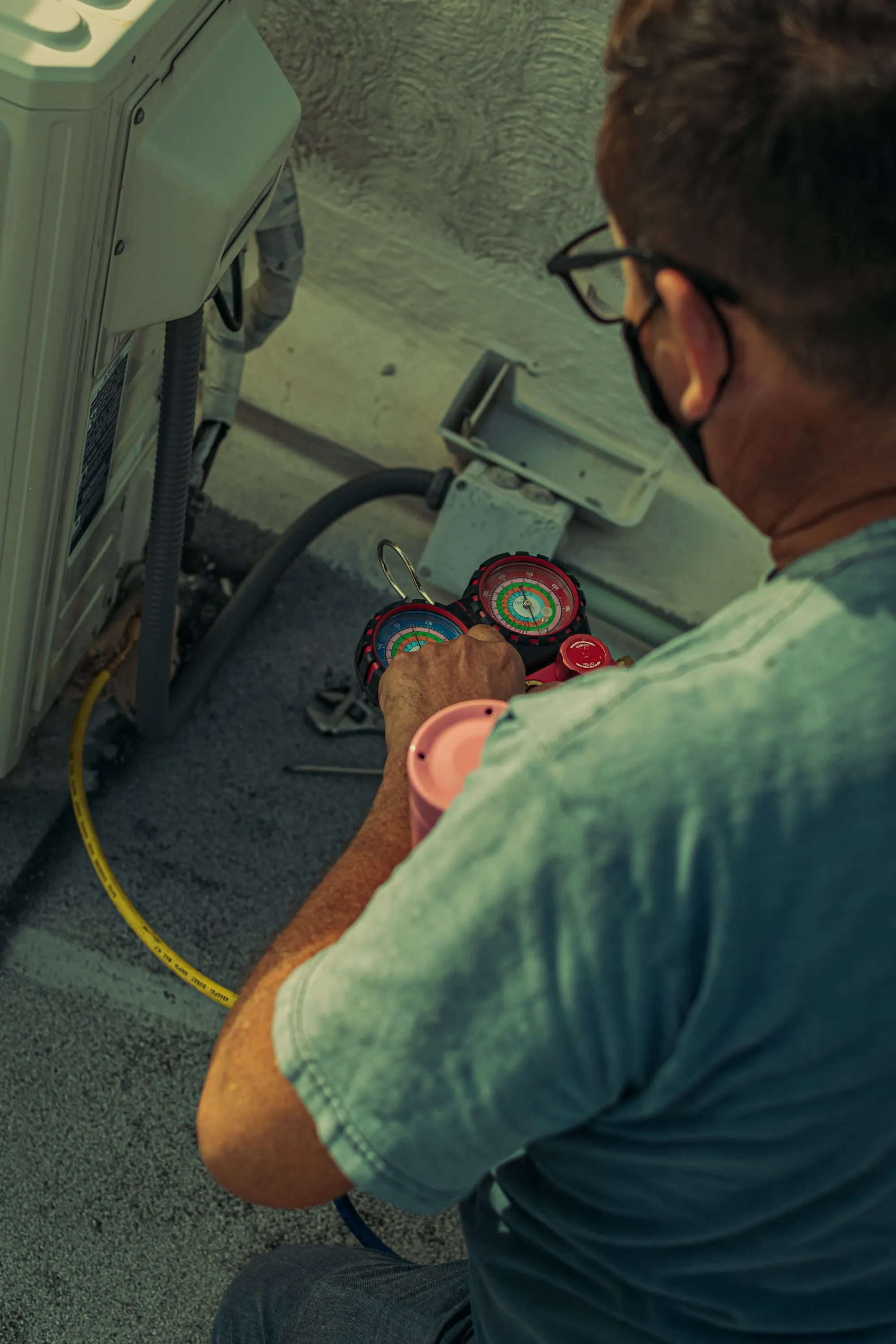
The real commercial HVAC maintenance cost depends on how many rooftop units you have, their tonnage, the visit cadence your agreement calls for (usually two to four times per year), and your building type. There is no universal flat rate. What is consistent: planned maintenance runs roughly three to five times cheaper than emergency repair, which makes the math fairly straightforward once you know your own building.
Key takeaways
- Commercial HVAC maintenance cost is driven by unit count, tonnage, annual visit cadence, building type, and rooftop access.
- Preventive maintenance agreements typically include eight checks per visit: filters, coils, belts and motors, refrigerant, electrical, condensate, economizer, and controls.
- Skipping maintenance exposes you to emergency labor rates, collateral equipment damage, and early unit replacement.
- Planned maintenance runs roughly three to five times cheaper than emergency repair.
- A real number for your DFW property requires a short walkthrough; a free Rooftop Risk Report is a practical first step.
What actually drives commercial HVAC maintenance cost?
No two commercial buildings in DFW carry the same maintenance price, because no two buildings have the same system profile. Understanding which variables move the number gives you a useful framework before you call a single contractor.
Unit count
The most obvious driver. A small retail strip with four rooftop units costs proportionally less to maintain than a 50,000-square-foot office with twelve. Each additional unit adds labor time, parts exposure, and refrigerant monitoring. Any honest quote starts with a unit count.
Tonnage
A 5-ton rooftop unit and a 25-ton unit are different animals. Larger tonnage means larger coils, heavier components, more refrigerant, and typically more time on the roof. If your building has high-capacity units serving large open floor plans, expect your per-unit cost to reflect that.
Visit cadence
Most commercial PM agreements in North Texas call for two to four visits per year. Two-visit programs cover pre-summer and pre-winter inspections. Four-visit programs add shoulder-season checks that catch problems before they compound in peak heat or peak cold. More visits mean higher annual cost, but they also mean shorter gaps between inspections, which is where emergency calls are born.
Building type and use
A restaurant with commercial kitchen exhaust near HVAC intakes has different contamination exposure than a medical office building. A warehouse with high door traffic and dust has different filter replacement cycles than a law firm. Occupant density, operating hours, and surrounding environment all affect how hard your system works and how quickly components degrade.
Rooftop access
This one surprises facility managers who haven’t thought about it. If your roof requires a man-lift, specialized access equipment, or extensive safety rigging, that labor cost gets passed through. Straightforward rooftop access keeps costs lower and encourages more thorough inspections on every visit.
What does a preventive maintenance agreement actually include?
A commercial PM agreement is only as valuable as what it covers. When reviewing commercial HVAC maintenance plans, the baseline you should expect is an eight-point rooftop check on every scheduled visit.
The eight-point rooftop check
1. Filters. Inspection and replacement or cleaning, depending on filter type. Dirty filters are the single most common cause of reduced efficiency and premature compressor stress.
2. Coils. Evaporator and condenser coils accumulate debris, reducing heat transfer. Coil cleaning at least once per year is standard in a DFW climate where cottonwood season and summer dust are real factors.
3. Belts and motors. Belt tension and motor amperage checks catch mechanical wear before a belt snaps mid-July. Motor bearings and fan blades get visual and auditory inspection for early failure signs.
4. Refrigerant levels. Low refrigerant is a symptom, not a standalone problem. It usually points to a leak. Pressure testing and refrigerant verification on every visit catches slow leaks before they become compressor replacements.
5. Electrical connections and contactors. Loose terminals and burned contactors are fire risks and efficiency killers. A technician should torque check all electrical connections and inspect contactor pitting on each visit.
6. Condensate drains. In humid DFW summers, clogged condensate lines back up into drain pans and eventually into ceilings. Clearing and treating drains on every visit is cheap insurance against water damage claims.
7. Economizer function. If your units have economizers, they need to open, close, and modulate correctly. A stuck economizer can waste significant energy for months without triggering an obvious alarm.
8. Thermostat and controls calibration. A thermostat that reads two degrees off is not a trivial problem on a building with 20 zones. Controls calibration ensures your system responds accurately and does not short-cycle or over-run.
Use the maintenance savings calculator to model how visit frequency and unit count interact with your maintenance budget.
What does skipping maintenance actually cost?
This section matters because the commercial HVAC maintenance cost question is really a comparison question. The relevant benchmark is not zero. It is the cost of emergency service.
Emergency repair rates
When a rooftop unit fails at 3 p.m. on a Wednesday in August, you are not getting standard labor rates. Emergency dispatch rates are substantially higher, and in DFW summers, contractor availability during peak demand is not guaranteed. The labor premium alone can exceed the cost of a full annual PM agreement.
Collateral equipment damage
Deferred maintenance rarely produces clean, isolated failures. A clogged condensate drain becomes a water-damaged ceiling tile becomes a mold remediation project. A worn belt that snaps can take a fan motor with it. Low refrigerant that goes undetected long enough damages the compressor, the most expensive component on any rooftop unit.
Early replacement
Commercial rooftop units are capital equipment. With proper maintenance, a well-built unit has a service life that spans well over a decade. Without it, that life shortens materially. Replacement costs for commercial equipment run well into five figures per unit, and a full system replacement can disrupt building operations for days.
The three-to-five-times comparison between planned maintenance and emergency repair does not capture these collateral costs. It only covers the direct labor and parts differential.
How do you get a real number for your DFW building?
No published price list will give you an accurate commercial HVAC maintenance cost for your property. The variables above interact in ways that require someone to actually look at your system.
The practical path for DFW facility managers is straightforward. Start with a clear inventory: how many units, approximate tonnage, age, and last service date if you have it. That information lets a contractor give you a scoped proposal rather than a ballpark guess.
Access logistics matter too. If your rooftop has any access complexity, mention it upfront so the quote reflects actual labor time.
Finally, ask specifically what each visit covers. A proposal that lists visit count but not scope is not a real proposal. The eight-point checklist above is a reasonable baseline for comparison.
If you want a faster start, the free Rooftop Risk Report walks through your building’s current exposure and gives you a clear picture of where deferred maintenance risk is highest before you talk to anyone.
Common questions
How much does commercial HVAC maintenance cost?
It depends on how many rooftop units you have, their tonnage, how many visits per year you schedule, and your building type. A strip mall with four small units costs far less to maintain than a mid-rise office with a dozen large ones. That said, planned maintenance runs roughly three to five times cheaper than emergency repair, so a quick walkthrough of your building will give you a real number fast.
What does a preventive maintenance agreement include?
A solid commercial PM agreement covers at minimum eight rooftop checks per visit: filter inspection and replacement, coil cleaning, belt and motor checks, refrigerant level verification, electrical and contactor inspection, condensate drain clearing, economizer function, and thermostat or controls calibration. The goal is catching small issues before they become compressor failures or full-unit replacements.
Is commercial HVAC maintenance worth it?
Yes. For most commercial properties, preventive maintenance is one of the clearest ROI decisions available. Emergency repair rates are substantially higher than planned service rates, replacement equipment can cost well into five figures, and a failed system during a Texas summer means tenant complaints, lost revenue, and possible code issues. Skipping maintenance trades a predictable small cost for unpredictable large ones.