What Is the $5,000 Rule for HVAC? A Repair-or-Replace Guide
The $5,000 rule for HVAC helps you decide repair or replace: multiply unit age by repair cost. Over $5,000? Replacement usually wins. Under? Repair may.
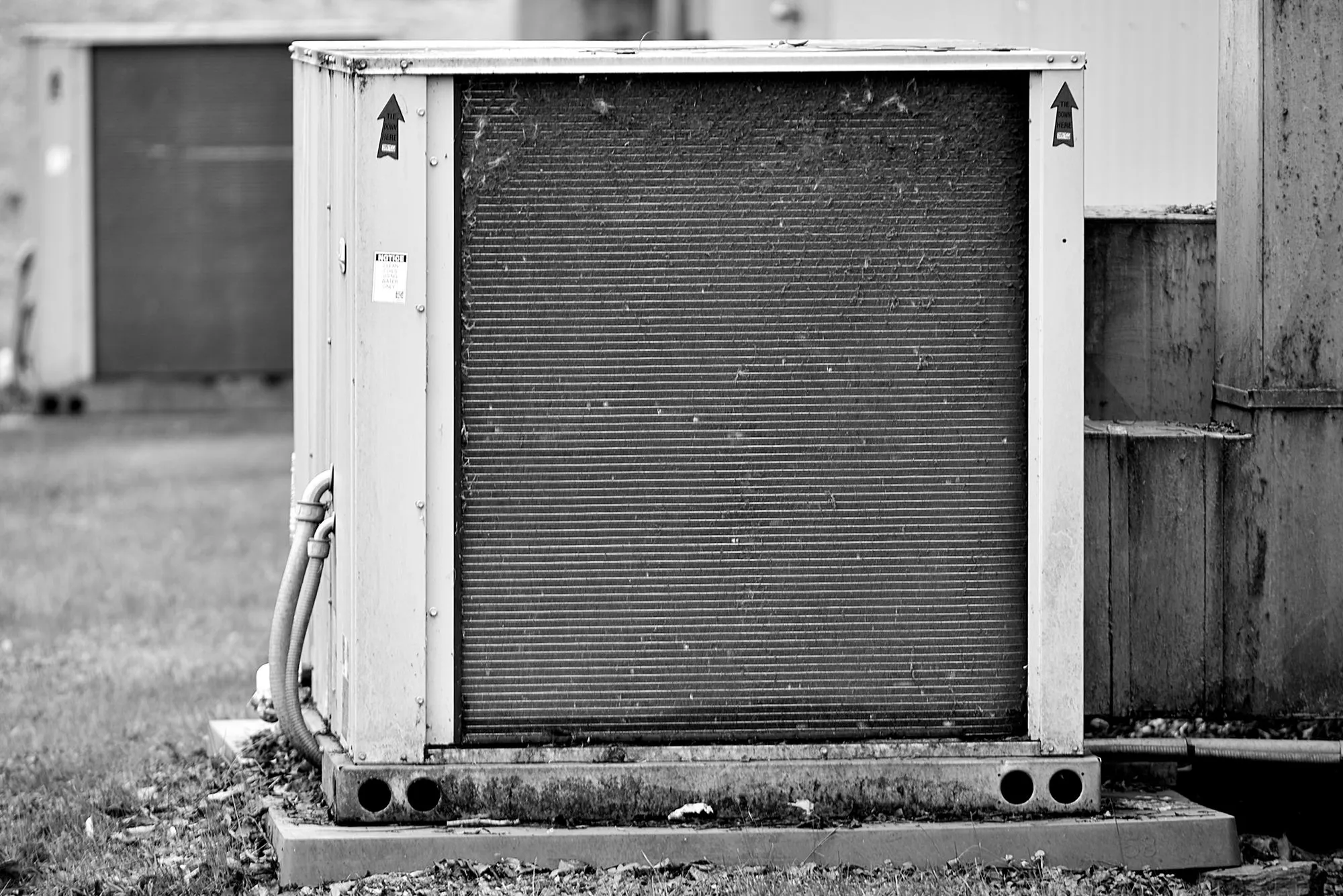
The $5,000 rule is a straightforward guideline for the repair-or-replace decision: multiply the unit’s age in years by the estimated repair cost in dollars. If that number is over $5,000, replacing the unit is usually the better value over time. If it’s under $5,000, a repair often makes more sense. It’s a rule of thumb, not a contract.
Key Takeaways
- Multiply unit age (years) by repair cost ($). Over $5,000 generally favors replacement.
- ASHRAE puts the median service life for commercial rooftop units at roughly 15 years, a useful companion check.
- R-22 refrigerant, repeat failures, and rising energy bills each push the needle further toward replacement.
- Preventive maintenance runs roughly three to five times cheaper than emergency repair, so the best time to run this math is before a crisis.
- Use the repair-or-replace calculator to run your own numbers before calling a contractor.
How the $5,000 Rule Math Actually Works
The formula is simple on purpose. Age times repair cost gives you a single number you can act on. A 5-year-old unit with a $600 repair scores 3,000. That’s well under the threshold. Fix it. A 14-year-old unit with the same $600 repair scores 8,400. That’s a different story.
Here’s a worked example that’s common in DFW commercial buildings. A rooftop unit installed in 2012 is now 14 years old. A technician quotes $700 to replace a failing condenser fan motor. The math: 14 times $700 equals $9,800. The $5,000 rule says replace. The repair cost looks small in isolation, but the unit’s age makes it a poor investment.
Try the numbers for your own equipment with the rooftop unit lifespan calculator.
Where the Rule Breaks Down
The $5,000 rule is a guideline, not a guarantee. It works best when you have one aging unit, one clear repair, and no unusual circumstances. Several situations make the formula less reliable.
First, it doesn’t account for what you’d replace the unit with. If a new RTU would cost $18,000 installed and your building’s lease runs only two more years, even a high score doesn’t automatically justify the capital spend. Lease term, budget cycles, and tenant agreements all matter.
Second, the rule treats every repair as equivalent. A $500 compressor patch is not the same as a $500 refrigerant leak fix. Compressor patches often fail again within a season. The formula doesn’t capture that.
Third, the rule says nothing about the rest of the system. A unit that scores 4,800 and looks like a keeper might be feeding into ductwork that needs full replacement. Total system condition matters.
Use the formula as a conversation starter, not a final answer. Pair it with an assessment from a qualified commercial technician.
The 15-Year ASHRAE Service Life Guideline
ASHRAE (the American Society of Heating, Refrigerating and Air-Conditioning Engineers) publishes median service life estimates for HVAC equipment. For commercial rooftop units, that figure sits at roughly 15 years. This is a guideline based on industry data, not a warranty or a hard cutoff.
What it means in practice: once a unit crosses 15 years, you should expect more frequent repairs, declining efficiency, and harder parts availability. That doesn’t mean the unit is dead at 15. Some run cleanly to 20 years with good maintenance. Others start degrading at 12.
The 15-year mark is most useful as a planning trigger. If your unit is 13 or 14 years old and the $5,000 formula is already pushing you toward replacement, you’re not catching a unit early in decline. You’re catching it late. That changes the conversation about repair timelines and budget allocation.
See how age stacks up against condition with the commercial HVAC replacement guide for Dallas.
Other Signals That Point Toward Replacement
The $5,000 rule and the ASHRAE guideline are quantitative tools. A few qualitative signals also deserve weight.
R-22 refrigerant. If your unit runs on R-22 (also called Freon), the equipment is almost certainly at least 15 years old. R-22 was phased out of production in the United States at the start of 2020. The remaining supply is recycled, limited, and expensive. Any repair involving refrigerant on an R-22 system adds cost that the $5,000 formula doesn’t fully capture. Replacement with a modern R-410A or R-454B unit eliminates that ongoing exposure.
Repeat failures. One repair per year is a maintenance reality. Two or more repairs in a single season is a pattern. If you’re calling a technician every few months on the same unit, the total annual repair spend likely exceeds what the formula suggests, and reliability risk is climbing.
Rising energy bills. Degraded coils, worn motors, and refrigerant leaks all reduce efficiency. A unit working harder to meet the same setpoint uses more power. If your energy bills have climbed without a clear operational explanation, an efficiency audit on your rooftop units is worth running before the next repair call.
Any one of these signals on its own adds nuance to the $5,000 formula. Two or more together usually confirm what the math already suggested.
How This Applies to Your DFW Building
Dallas-Fort Worth commercial properties put HVAC equipment under real pressure. Summers consistently push heat indexes above 100 degrees, and rooftop units run at or near full load for four to five months of the year. That sustained demand accelerates wear compared to milder climates, so the ASHRAE median service life guideline may land conservatively for DFW equipment that hasn’t been maintained on schedule.
Facility managers in North Texas also face a specific parts and labor market. When a major heat event hits the region, contractor capacity tightens fast. Emergency repair calls during peak season carry premium pricing and longer wait times. Running the $5,000 rule and the ASHRAE age check before the summer cooling season gives you time to act on a planned replacement rather than an emergency one.
Preventive maintenance is the other lever. Industry data consistently shows it runs roughly three to five times cheaper than emergency repair. A unit that hits the $5,000 threshold mid-summer, mid-lease, with no budget allocation is a much harder problem than one you identified in March.
For a full picture of your rooftop unit’s risk profile, the free Rooftop Risk Report walks through age, condition, and replacement priority across your DFW portfolio.
Common questions
What is the $5,000 rule for HVAC?
The $5,000 rule is a repair-or-replace guideline: multiply your unit's age in years by the estimated repair cost. If the result exceeds $5,000, replacement is generally the better long-term value. If it falls below $5,000, repairing the unit often makes more financial sense. It's a starting point, not a firm policy.
Does the $5,000 rule apply to commercial rooftop units?
Yes, the same math applies to commercial rooftop units. Because commercial RTUs are larger and more expensive than residential equipment, repair costs tend to be higher, which means the formula pushes more aging units toward replacement. Always weigh the result against remaining useful life and energy costs.
What other factors decide repair vs replace?
Beyond the $5,000 formula, look at refrigerant type (R-22 is phased out and expensive), frequency of recent repairs, energy bills trending upward, and whether the unit has crossed the 15-year ASHRAE median service life guideline. Any two or more of these signals together usually tip the decision toward replacement.